About Tertiary Butanol
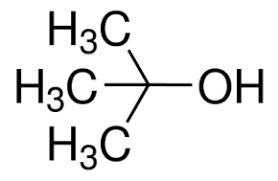
Tertiary Butanol is a colorless liquid that features a mothball-like scent. It is widely used in making perfumes, flavors and pharmaceuticals solvents. This is also suited for making paint remover. It is a good additive that can be also used as a denaturant in cosmetic alcohols. Tertiary Butanol has been utilized for producing a wide array of odor enhancers as well as cosmetic products. This is highly flammable and must be used with caution to prevent the occurrence of bursting.
Key Characteristics of Tertiary ButanolTertiary Butanols defining physical traits include a melting point of 25.5C and a boiling point of 82C. With a neutral pH and density of 0.78 g/cm, it easily dissolves in water, ethanol, and ether. Notably, it exists as a solid below 25.5C and becomes a clear liquid above this mark, making it adaptable for varied industrial requirements.
Safe Handling and Storage GuidelinesGiven its flammable liquid and vapor rating and a flash point of 11C, proper storage of Tertiary Butanol is essential. Keep containers in cool, dry, well-ventilated spaces, far from heat or ignition sources. Utilise galvanized drums, IBCs, or bulk containers, following UN 1120 regulations, to ensure safety and product integrity during transportation and storage.
Versatile Industrial ApplicationsTertiary Butanol is commonly used as a solvent, intermediate for chemical reactions, fuel additive, and as a denaturant in ethanol. Its direct use or blending ability suits laboratory research, pharmaceutical manufacturing, and diverse chemical syntheses. Its consistent performance and high purity meet stringent demands across multiple industries.
FAQs of Tertiary Butanol:
Q: How should Tertiary Butanol be stored for optimal safety?
A: Tertiary Butanol needs to be stored in cool, dry, and well-ventilated areas away from open flames or heat sources, due to its flammability. Use only galvanized drums, IBCs, or bulk containers as per prescribed regulations and ensure the storage area complies with local hazardous material guidelines.
Q: What are the primary uses of Tertiary Butanol in industry?
A: Tertiary Butanol serves as a solvent, intermediate, fuel additive, and is also used in chemical synthesis. Additionally, it acts as a denaturant in ethanol, and is valuable in laboratory and pharmaceutical settings because of its high purity and ready solubility.
Q: When does Tertiary Butanol change from solid to liquid, and why does this matter?
A: Tertiary Butanol melts at 25.5C, appearing as a white solid below this temperature and as a clear liquid above it. This phase change affects storage, handling, and application methods, making it crucial to monitor temperature conditions during transport and use.
Q: Where is Tertiary Butanol commonly sourced from?
A: This compound is mainly derived from isobutylene or through the hydrogenation of acetone. These processes yield a consistently high-purity product that is suitable for a wide array of industrial applications.
Q: What benefits does using Tertiary Butanol bring to chemical synthesis and industrial applications?
A: Tertiary Butanol provides high solubility, neutral pH, and a unique phase-changing property, enhancing process versatility in chemical synthesis, pharmaceuticals, and as a fuel additive. Its high purity (over 99%) ensures reliable, reproducible results across varied applications.
Q: How is Tertiary Butanol applied in chemical processes?
A: It can be used directly or blended with other compounds, depending on the application. Its versatility and miscibility with water and organic solvents contribute to efficient process integration in chemical manufacturing and research settings.










 Send Inquiry

 Send Inquiry
